Check the park notice twice
Look the evening before and again in the morning, for special openings, weather and temporary closures.
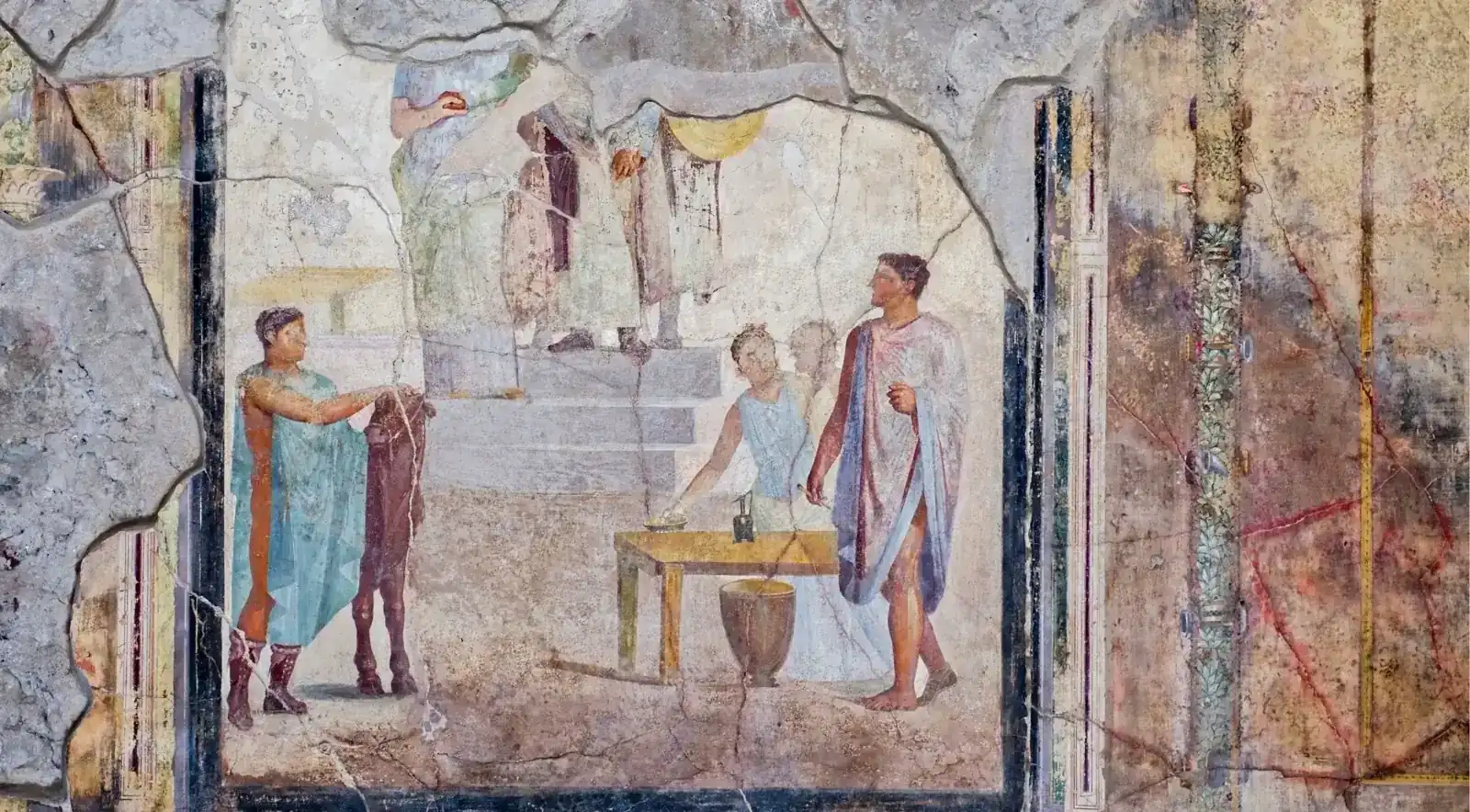
On most January days Pompeii is open 9:00 AM to 5:00 PM, with last entry at 3:30 PM. For a first visit, arrive between 9:00 and 10:00 AM, allow three to four hours, wear shoes with good grip and keep your plans flexible if heavy rain is forecast.
This guide covers January 2027, with the park's arrangements and ticket prices as published in November 2026. Recheck the official park timetable close to your travel date, particularly for public holidays and special events. For the full holiday calendar from October to March, see our Pompeii winter opening hours guide.
| Question | Quick answer |
|---|---|
| Is Pompeii open in January? | Yes, on ordinary days. 1 January is normally a closure, unless the park announces otherwise. |
| Opening hours | 9:00 AM–5:00 PM |
| Last admission | 3:30 PM |
| Best arrival time | 9:00–10:00 AM for a relaxed visit |
| How long do you need? | 3–4 hours for most first-time visitors; 2 hours for the highlights only |
| Daytime temperatures | Roughly 12–14 °C (54–57 °F) around Naples, with colder mornings and evenings |
| Are crowds heavy? | Usually much lighter than in spring, summer or early fall; the holidays and the free Sunday are the exceptions |
| Standard adult entry | €20 Pompeii Express, on the published 2026 tariff |
| Entry with the suburban villas | €25 Pompeii Plus, on the published 2026 tariff |
| First free-entry Sunday | Sunday 3 January 2027, if the park's usual first-Sunday program is unchanged |
| Best tour choice | A morning tour of about 2 hours with an archaeologist, then time on your own |
Our verdict: if you can pick a reasonably dry morning, January is a very good time to see Pompeii. If you have only one day in the Naples area and the forecast shows persistent heavy rain, book a guided tour with free cancellation or swap your sightseeing days. Compare winter guided tours of Pompeii or read our full Pompeii in winter guide.
For many travelers, yes, and the quiet is the main reason.
Pompeii is not a single building or an indoor museum. It is an excavated city of streets, public squares, homes, bakeries, baths, temples and theaters spread over a large area. In July or August, sightseeing means long stretches under a strong sun. In January the cooler air usually makes walking more comfortable, and you are less likely to find the famous streets packed with tour groups.
Winter changes the atmosphere too. The low sun throws long shadows across the Forum, and Mount Vesuvius sometimes has snow on its upper slopes. You have room to notice the details: the stepping stones in the old roads, the remains of shop counters, the layout of homes that were in daily use before the eruption of AD 79.
January is not the best month for everyone, though.
January suits:
January suits less well:
The trick is a winter-sized plan. A summer sightseeing schedule does not fit into January daylight.
A January trip to Pompeii usually sits inside a few quiet days around the bay: the museums and old center of Naples, the compact excavations at Herculaneum, a Mount Vesuvius crater walk on a clear day, and a low-season base in Sorrento with the Amalfi Coast beyond it. These are tours and tickets around Pompeii that run in winter.
The first week of January needs care. Don't assume the park is open just because a ticket seller lists tours for that date.
| January 2027 date | What to expect | Booking advice |
|---|---|---|
| Friday 1 January | Normally closed under the park's standing rules, unless a special opening is announced | Check directly with the park before planning a visit or booking a non-refundable excursion |
| Saturday 2 January | Normal opening expected, subject to announcements | A practical alternative if you arrive over New Year |
| Sunday 3 January | First Sunday of the month; the park's regular free-entry program is expected to apply | Expect more interest than on a typical January weekday, and confirm the day's admission arrangements |
| Wednesday 6 January | Epiphany (La Befana), an Italian public holiday; the park lists no routine closure for it | Check opening notices and allow for Italian holiday visitors and transport changes |
| Rest of January | Usually the regular winter opening, barring weather or special changes | Choose a weekday morning for a quieter visit |
A standing calendar rule is not a final announcement for every future holiday. The park's site currently describes 1 January as a regular closure "unless otherwise communicated". If it later announces a special opening for 1 January 2027, the official notice takes precedence. Visiting over New Year from December? Our Pompeii in December guide covers Christmas week.
It is a good budget option, but free admission does not mean a quiet visit. The first-Sunday scheme is popular with residents and visitors, so queues and busier central areas are possible even in January. Free entry works differently from normal advance ticketing, so check the park's instructions for that date instead of assuming you need the usual paid ticket.
If you prefer a more relaxed visit and your schedule allows it, choose an ordinary weekday morning instead. For the full breakdown of winter dates, see Pompeii winter opening hours and holiday closures.
The normal winter timetable runs from 15 October to 15 March.
| Access | Published winter time |
|---|---|
| Archaeological park opens | 9:00 AM |
| Last entry to the park | 3:30 PM |
| Archaeological park closes | 5:00 PM |
| Last admission to many notable houses | About 4:00 PM |
| Closing of many notable houses | About 4:20 PM |
| Suburban villa route at Porta Ercolano | Last access 3:30 PM in winter |
The last admission time is not a sensible arrival time. Entering at 3:30 PM leaves you very little of an enormous site, and some highlights have earlier cutoffs of their own.
The park's winter list currently shows the House of the Vettii, the Lupanar, the Stabian Baths and the Antiquarium, among others, with last admission around 4:00 PM and closing around 4:20 PM. Other monuments stay accessible later, while some interiors close temporarily for conservation or staffing.
Our advice: enter by 10:00 AM, visit the places with restricted hours before mid-afternoon, and keep the last part of your visit for the broad outdoor spaces. For individual building hours and temporary closures, check the park's list of open buildings.
January is one of the coldest months around Naples, although cold is relative here: the long-term average daily high is 13.0 °C (55 °F). You are more likely to meet a chilly breeze, cloud and showers than snow at the excavations. Naples averages about 92 mm of rain over 9 rainy days in January. The figures below describe the general January climate around Naples, not a forecast for your visit.
| Weather factor | Typical January conditions |
|---|---|
| Daytime air temperature | Roughly 12–14 °C (54–57 °F) |
| Early mornings and evenings | Much colder; the average overnight low is 4.4 °C (40 °F) |
| Rain | A real possibility; expect some wet days and check the hourly forecast |
| Wind | Can make exposed streets and the Forum feel colder than the thermometer says |
| Daylight | About 9½ hours in mid-January, increasing through the month |
| Snow in Pompeii itself | Unusual |
| Snow on Vesuvius | Possible, especially in colder spells |
A dry 13 °C day with sunshine feels pleasant when you are walking. The same temperature in wind and rain feels distinctly chilly, particularly when you stop to listen to a guide.
Think light winter hiking clothes, not heavy mountain gear:
Leave large luggage at your hotel. The park does not allow bags larger than 30 × 30 × 15 cm inside, and luggage storage at the entrances is paid; the official visitor services page has the details.
Ordinary light rain does not close the site. Storms, strong wind or hazardous conditions can lead to restrictions or temporary closures, and parts of the excavations can be cordoned off for safety or conservation. If rain is forecast:
Our guide to visiting Pompeii in the rain has a shorter wet-weather route and the cancellation questions to ask.
January is usually one of the least crowded times of year. The park's own figures for 2024 show about 3,600 visitors a day in January, its quietest month, against about 16,700 a day in May. The difference is most noticeable on ordinary weekdays after the New Year period. You will still share the Forum and the famous houses, but the pace is calmer than in peak season.
| When you visit | Likely atmosphere | Our suggestion |
|---|---|---|
| An ordinary Tuesday to Thursday morning | Usually the easiest time to explore calmly | Excellent for independent visitors and photographers |
| An ordinary weekend | Generally manageable, with more local day-trippers | Aim for the 9:00 AM opening |
| New Year, 6 January or the free Sunday | Potentially busier than the January average | Allow extra time and check the entry arrangements |
Crowds depend on the weather, school holidays, cruise calls and events, and nothing guarantees you an empty archaeological site.
There is less pressure than in peak season, but booking ahead still helps. Pompeii sells personal tickets and caps admissions, and buying through the official system cuts your time at the ticket office. That matters most for a fixed-date visit or a guided tour with a set departure.
For a flexible independent visit on an ordinary January weekday, same-day tickets are usually easier to get than in summer, but don't assume any date has tickets until you check.
The park's published tariff, in force from 12 January 2026, lists these options. They are the latest official prices, not a promise that the rates will stay the same through January 2027.
| Ticket | Published adult price | What it includes | Best for |
|---|---|---|---|
| Pompeii Express | €20 | The main ancient city of Pompeii; not the suburban villas | Most first-time visitors spending 2–4 hours |
| Pompeii Plus | €25 | The main city plus the suburban villas, including the Villa of the Mysteries, Villa Regina and its Antiquarium at Boscoreale, and the shuttle bus | Visitors who specifically want the Villa of the Mysteries |
| Three-day multi-site ticket | €30 | Pompeii Plus with Oplontis, Villa Arianna, Villa San Marco, the Stabiae museum and Boscoreale, one entry to each, subject to each site's opening | History-focused visitors spending several days in the area |
The park also publishes reduced and free categories. Eligibility depends on age, nationality or residency rules and documents, so check your circumstances on the official ticket page.
Our advice: on a first January visit, Pompeii Express is enough for a very rewarding day. Buy Plus only if you intend to see the suburban villas; the short winter day makes a distant optional stop harder to fit, particularly if you arrive after 11:00 AM.
A standard ticket is single-entry and does not let you leave and come back in. Buy directly through the official ticket page, which sends you to the park's authorized Vivaticket seller, or choose a guided tour that states clearly which ticket it includes. Our Pompeii tickets explained guide compares the official tickets, booking and skip-the-line claims in depth.
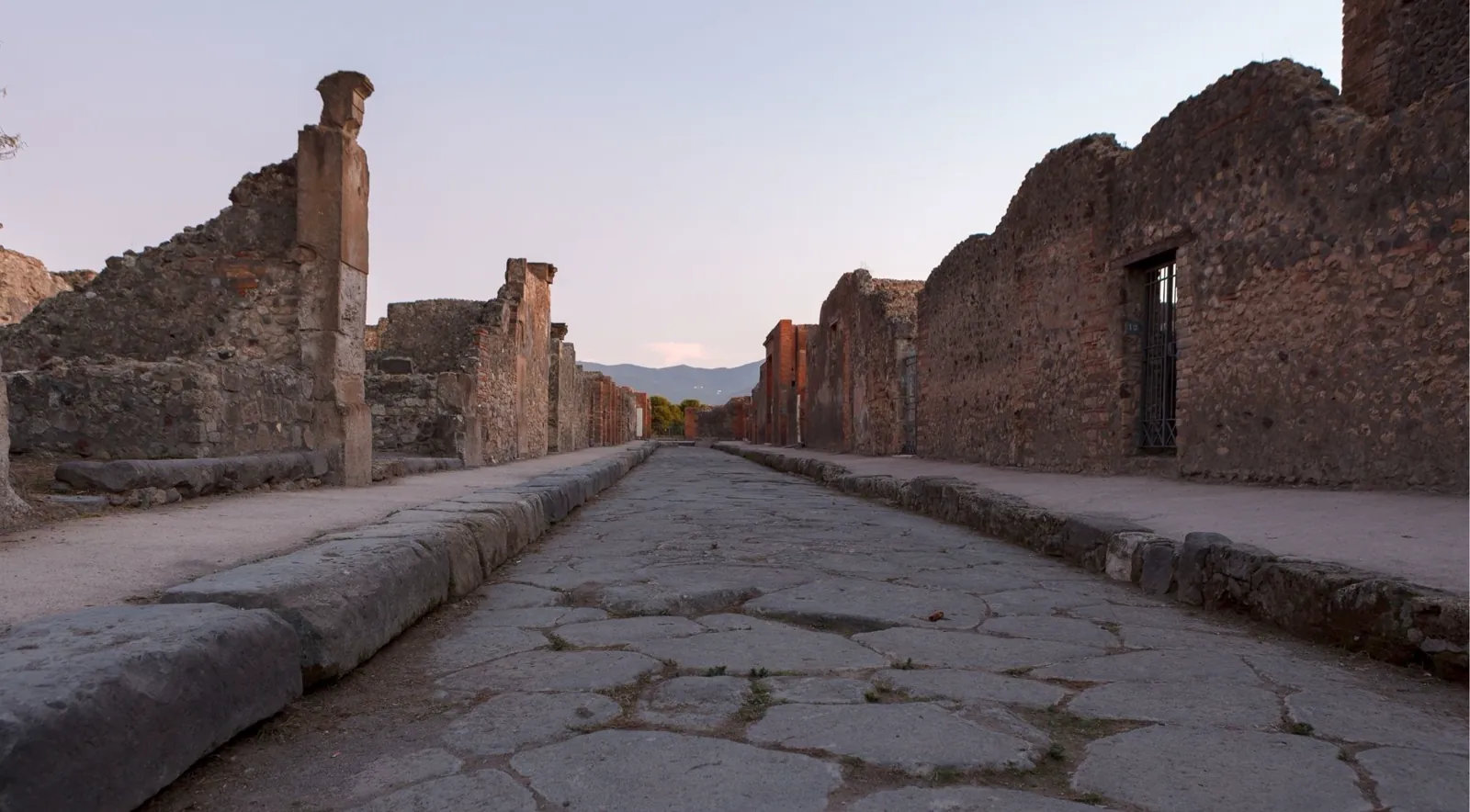
You don't need to cover the whole city. These are the highlights we would put first on a winter visit, subject to any temporary closures.
The Forum was the civic heart of Pompeii and one of the best places to take in the city's scale, its public buildings and Vesuvius beyond the ruins. On a clear winter day the low light is excellent for photography.
Close to the Forum, they show Pompeii's public and religious life. They fit naturally into a short route from Porta Marina and don't require you to cross the city.
One of Pompeii's grandest houses, it shows the scale and wealth of an elite Roman home. Check the entrance arrangements on the day.
Frescoes and richly decorated rooms make this one of the most memorable houses on the site. Its interior keeps earlier winter hours than the park as a whole, so don't leave it to the last minutes of your visit. Our House of the Vettii guide has the background.
The surviving rooms and the bathing layout explain a familiar part of everyday Roman life, and they sit on the natural route toward the theaters.
Pompeii's famous ancient brothel is small and draws a lot of interest, so you can easily spend more time waiting than looking. Treat it as an optional stop, not the centerpiece of your day.
The Large Theatre changes the perspective after the streets and houses. If it is dry and you still have time, the theater district makes an excellent end to a shorter visit.
The Antiquarium presents finds and the story of Pompeii. It is useful at the start or end of a visit, especially when you want context or a break from the weather. Check its current opening and last-entry times; in winter it closes before the park.
Its frescoes are among the main reasons to buy Pompeii Plus, but the villa lies outside the central cluster of highlights. You need extra walking time, and you must be at Porta Ercolano before the 3:30 PM winter last access to the suburban villa route. We would make it a priority only if you arrive early and are happy to spend longer on site. The 3-hour Villa of Mysteries tour with an archaeologist (4.8/5 from 1,441 reviews, from $58) takes care of the timing. For an official site plan, download the park's map and visitor guide before your trip.
The best route depends on the weather, your energy and whether you have a guide. These are planning examples, not guaranteed sequences: the park can change access to individual houses and paths.
Best for: visitors short on time, families on a wet or cold day, and travelers combining Pompeii with sightseeing in Naples.
Don't try to add the Villa of the Mysteries, the amphitheater, every major house and the theaters to the same two hours. Pompeii is much larger than most first-time visitors expect.
Best for: almost everyone visiting Pompeii for the first time in January.
| Approximate time | Plan |
|---|---|
| 9:00–9:30 AM | Arrive, go through the entrance and get your bearings near the Forum |
| 9:30–10:15 AM | The Forum, the Basilica, the Temple of Jupiter and the Sanctuary of Apollo |
| 10:15–11:15 AM | The major houses, such as the House of the Faun and the House of the Vettii, if open |
| 11:15 AM–12:00 PM | The ancient streets, stopping at a bakery or thermopolium along the way |
| 12:00–12:45 PM | The Stabian Baths and the theater district, with a short break |
| 12:45–1:00 PM | Head for Piazza Esedra or your chosen exit; add the Antiquarium if it is open and you have time |
This plan leaves a reasonable margin for weather, photographs and changes in access. If you want a guide, book a morning tour of about two hours and use the remaining hour or two for whatever interests you most. See the guided tours that suit a winter morning.
Best for: keen archaeology fans on a dry day.
Arrive at opening and spend the first half of the visit on the Forum and the central houses. Then head for Porta Ercolano and the Villa of the Mysteries well before the 3:30 PM cutoff for that route. The extra distance makes it a harder walking day, and you need the right ticket. It can be an excellent January outing, but it is not our default if you are traveling with younger children, have limited mobility or face a poor forecast.
Both work well in January. The choice comes down to how much explanation, organization and flexibility you want.
| Way to visit | Advantages in January | Trade-offs | Best for |
|---|---|---|---|
| Self-guided visit | Choose the driest day, stop for photos, move at your own pace | Easy to miss the context or lose time navigating | Repeat visitors, independent travelers, tight budgets |
| Small-group tour with an archaeologist | An efficient 2-hour introduction with expert explanation | Fixed meeting time; the tour may continue in ordinary rain | Most first-time visitors |
| Private guided tour | Your own pace, family questions and a route shaped around your interests | Usually costs more | Families, groups, special interests |
| Naples or Sorrento excursion with transport | Transport and guide arranged together | Less flexibility and often a longer day overall | Visitors who don't want to deal with regional trains |
Pompeii's ruins often need explaining: a counter, a doorway or a courtyard looks ordinary until you know what happened there. A good guide brings the city to life in about two hours and leaves you time to go back to your favorite places on your own.
Two hours with an archaeologist, in groups of up to 20, with the Express entry ticket included, so there is no separate ticket to buy. Take a 9:00 or 10:00 AM start in January and you finish the guided part by midday, with time left for the House of the Vettii and the other interiors before their 4:00 PM last admission.
Check January datesFree cancellation up to 24 hours before · secure checkout via GetYourGuide
Whichever tour you choose, check these four things before you book:
If you are a family, the 2-hour private family tour with an archaeologist (4.8/5 from 265 reviews, from $347 for up to five, entry extra) pitches its commentary at children. For tour styles and prices side by side, see the best guided tours in winter, Pompeii guided tours and Pompeii tour costs.
Can you use an independent audio guide? Be careful. The park's visitor services page says only the official audio guides bought inside the archaeological park may be used on site. They cost €9 for one adult and are available at Porta Marina, Piazza Esedra and Piazza Anfiteatro, with an identity document. Check the current rules before you buy or rely on a third-party audio product sold for use inside the ruins.
Pompeii is a straightforward winter day trip from Naples or Sorrento. The two big mistakes are mixing up the two Pompei rail stations and building a day around train times nobody has checked.
Take an EAV Circumvesuviana train toward Sorrento and get off at Pompei Scavi–Villa dei Misteri, the station near the Porta Marina entrance. On the timetable in force since 17 October 2026 the ride from Napoli Garibaldi takes about 36 minutes, with trains every 30 minutes, although delays and disruption happen. Check the current EAV timetables close to your departure; an old screenshot may be out of date. Our Naples to Pompeii in winter guide walks you through it. If you would rather not deal with the train, the Pompeii tour from Naples with ticket, guide and transfer (4.7/5 from 2,974 reviews, from $53) handles the travel.
The same Circumvesuviana line links Sorrento with Pompei Scavi–Villa dei Misteri. The train takes about 35 minutes on the current timetable, plus walking and waiting time, so a three-to-four-hour visit is convenient even in January. You can go on your own or choose a tour with transport, particularly if you prefer door-to-door arrangements. Coming from further along the coast? See Pompeii from Sorrento and the Amalfi Coast in winter.
A trip from Rome usually means a high-speed train to Naples, then a regional connection or a transfer. An organized excursion makes the journey simpler, but you still need to leave early and finish by the 5:00 PM closing. If you are spending several nights in Rome, make it an early-start day, not an afternoon outing. Compare the options in our Pompeii tours from Rome guide.
Trenitalia's Pompei station in the modern town is not the same as Pompei Scavi–Villa dei Misteri. Check both the train company and the arrival station before you set off.
Sometimes, but it is not the safest default plan. A crater visit depends on its own opening arrangements and on mountain weather: the summit can be windy, cold, wet or icy when conditions at Pompeii are manageable, and the short daylight leaves little room for delays between the two. If seeing both matters to you:
The full-day Pompeii and Mount Vesuvius tour from Naples or Sorrento (4.7/5 from 5,068 reviews, from $107) does the driving between them, but the crater part still depends on the weather. Our Pompeii and Mount Vesuvius in winter guide covers the practical pros and cons.
Herculaneum's excavations are more compact, which helps in poor weather or when you have only a couple of hours. Pompeii is larger and gives you a fuller sense of a Roman city; Herculaneum is especially impressive for its preserved buildings and detail. If you have time for both, visit them separately instead of rushing them into one January afternoon, or let a guide plan the day: the Pompeii and Herculaneum tour with an archaeologist (4.97/5 from 314 reviews, from $127) covers both in five hours. Read Pompeii vs Herculaneum in winter to choose.
Naples is the most versatile base if Pompeii is one part of a wider winter city break. You have restaurants, museums and other indoor sights if the weather turns, and the rail connection is easy.
Sorrento works if you want a quieter coastal base and don't mind some restaurants, boats and tours running reduced schedules. It is still a practical starting point for a Pompeii day trip.
Modern Pompei gives you the shortest morning journey to the park and suits travelers whose main goal is the ruins. It is a very different stay from Naples or Sorrento, so choose it for convenience, not for a city-break atmosphere.
Hotel prices and availability in January follow a different pattern from summer. Compare your specific dates, the cancellation terms, the heating and the distance to the right station, instead of assuming every hotel is cheap or every coastal property is open. Our where to stay for Pompeii guide compares the areas.
Look the evening before and again in the morning, for special openings, weather and temporary closures.
You have enough time for the main monuments without watching the clock.
Several interiors stop admitting visitors before the wider site closes.
Pompeii is extensive, and online maps don't always show temporary barriers.
Tickets carry your name, and staff can check the holder.
Standard single-entry tickets do not allow re-entry.
The park has strict bag rules, and suitcases are no use on Roman streets.
On Italian public holidays regional trains and connections can run differently from a weekday.
It makes the trip back simpler and saves you rushing over uneven stone near closing time.
A tour operator's refund rules are not necessarily the same as the park's admission policy.
Pompeii normally opens throughout January, but 1 January is a regular closure unless the park announces a special opening. Other exceptional closures or restrictions can happen, so check the official timetable for your day.
The park's standing rule lists 1 January as closed, unless otherwise communicated. Don't count on getting in on Friday 1 January 2027 without a specific official announcement.
The park's standing timetable does not list 6 January as a routine closure. It is an Italian public holiday, though, so check for special notices, changes in services and holiday transport.
Usually not, if you dress for several hours outdoors. Daytime highs around Naples are usually in the low teens Celsius, about 13 °C on average, but wet weather and wind make it feel colder. Waterproof shoes and layers matter more than heavy clothing.
Snow at the ruins is unusual, though it can happen in an exceptional cold spell. Snow on Mount Vesuvius is more likely and makes a striking backdrop on a clear day.
Generally yes, particularly on ordinary weekdays. The New Year period, Epiphany and the free first Sunday can be busier.
Sunday 3 January 2027 is the first Sunday of the month. Pompeii normally takes part in Italy's first-Sunday free-entry scheme, but confirm the arrangements for that date on the park's official website.
On the current winter timetable the main archaeological park closes at 5:00 PM, with last general admission at 3:30 PM. Many notable houses and the Antiquarium close earlier.
Yes. Independent visits are practical, especially if you download the official map and pick a short list of highlights. A guide helps most on a first visit, if you want to understand how Pompeii's homes, shops and public buildings worked.
Allow 3–4 hours for a comfortable first visit, 2 hours for a compact highlights route and 5 hours or more if you are seriously interested in the suburban villas and the outlying areas.
The park runs official ticket offices at its entrances, but buying ahead saves time and confirms availability for your date. It helps most on weekends or when you have a fixed train and tour time.
Light rain is manageable, but heavy or persistent rain makes an outdoor archaeological park much less enjoyable and the paving more slippery. If you are in the region for several days, use the driest one. Always follow official restrictions and closure notices.
Crater access follows its own rules and weather decisions, so don't assume it is open because Pompeii is. Check that the trail is open and that winter transport runs before you buy a combined excursion.
January often feels quieter, while late February has a little more daylight. Both are cool months with a chance of rain. Choose January for a low-season visit, and late February if slightly longer days matter more to you.
It can be, especially for children interested in volcanoes and Roman history. Keep the route short, dress them in warm waterproof layers and plan breaks. A family-focused guide makes the ruins easier to understand, and children with less stamina may prefer a visit of 1.5 to 2 hours.
Morning, ideally 9:00–10:00 AM. You can see the major houses well before their own closing times, use the brightest part of the day and be back in Naples or Sorrento before evening.
Yes. If seeing Pompeii matters more to you than warm southern Italian weather, January is one of the most pleasant times to explore the ruins. You swap peak-season heat and crowds for cool mornings, quieter streets and a slower pace. The compromises are simple: keep an eye on the rain, arrive early, plan around the 5:00 PM closing and don't assume the park is open on New Year's Day.
For most first-time visitors, the easiest January plan is a morning train from Naples or Sorrento, a two-hour guided walk and then another hour or two on your own. That gives you an excellent introduction without turning a short winter day into a race.
Plan the next step: compare winter Pompeii guided tours, check tickets and prices or see the complete winter opening-hours guide.
Researched in November 2026. January 2027 holiday exceptions, forecasts, train timetables and tour availability can change.