Shoes with real grip
Pompeii's paving is ancient, uneven and slippery when wet. Comfortable walking shoes with a good sole matter more than anything else you pack.
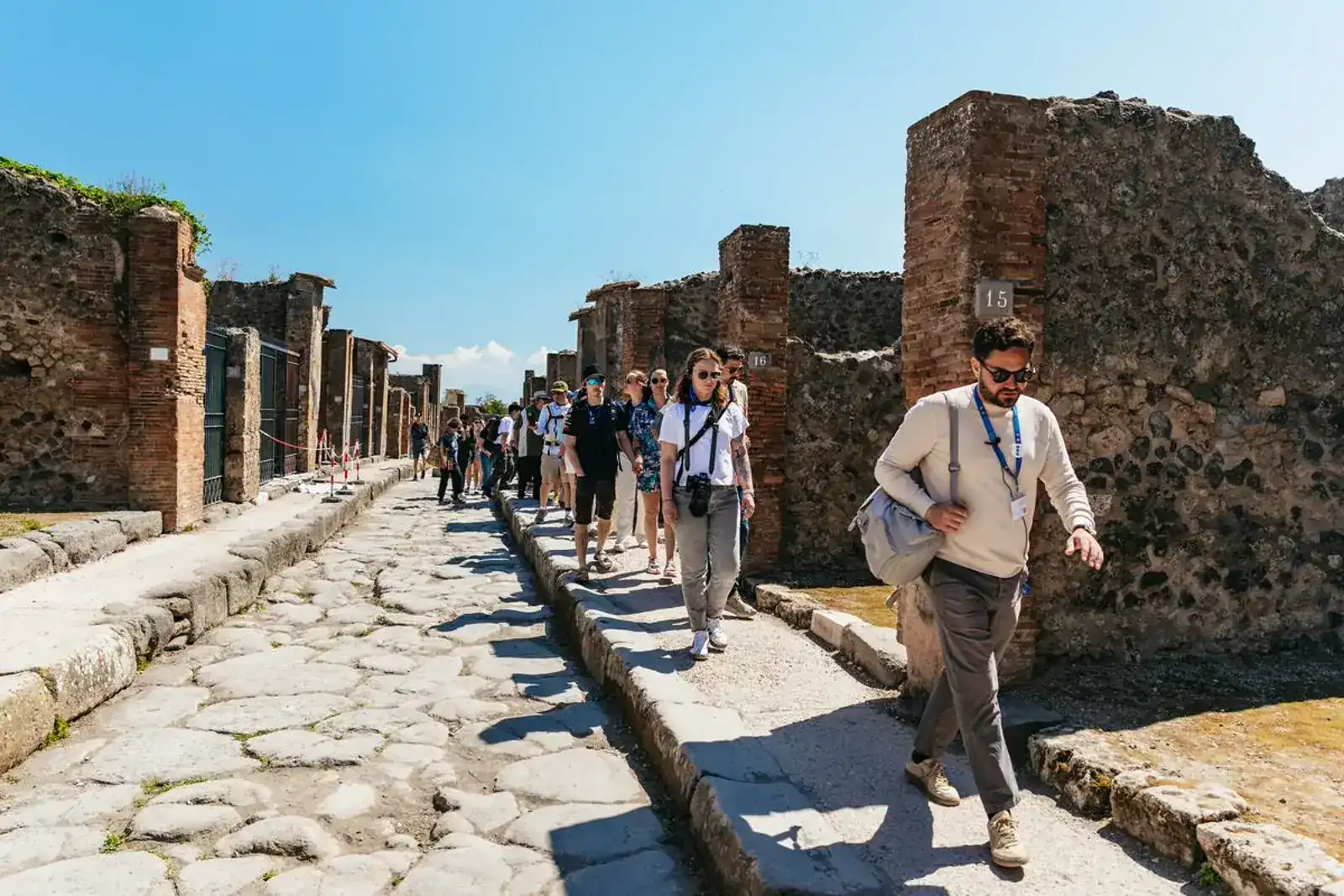
November is one of the more rewarding months to see Pompeii if you prefer cool walking weather to summer heat. The ancient city stays open all month, but the day is shorter than in summer and the stone streets need care when they are wet. Book a morning slot with free cancellation, and you keep the option of moving the day if the forecast turns.
Picture walking into the Forum on a clear autumn morning: the surviving columns stand against the cone of Mount Vesuvius, the sun sits low, and you have room to look at details that get lost in the summer crush. November is not guaranteed to be quiet or sunny. It does suit anyone who wants to take Pompeii slowly.
Coming later in the season? Our Pompeii in winter guide covers December to February month by month, with the Christmas and New Year closures.
| Detail | What to plan for |
|---|---|
| Opening | 9:00 AM–5:00 PM |
| Last admission | 3:30 PM |
| Afternoon highs | Around 16–19 °C (61–66 °F); the long-term average daily high is 17.1 °C |
| Rain | The wettest month of the year in Naples: about 152 mm over 10 rainy days on average |
| Crowds | About 6,300 visitors a day in November 2024, against 15,500 in October; weekends and holidays vary |
| Pompeii Express | €20 adult |
| Pompeii Plus | €25 adult, including the suburban villas |
| Time on site | 3–4 hours |
| Best arrival | 9:00–10:00 AM |
Comfortable temperatures. Pompeii is a large, mostly outdoor archaeological park, and you can easily walk several kilometers on its original streets. In July and August the exposed stone and the lack of shade make a long visit exhausting. November's cooler air is a relief.
A better pace. Outside the holidays you will find fewer people on many streets. The busiest buildings still draw tour groups, but you have more chances to stop, read and photograph at your own speed.
Winter light. A low sun and broken cloud change how the ruins photograph. The Forum and Vesuvius can look spectacular after a shower, although a clear view of the mountain is never guaranteed.
Easy combinations. Naples and Herculaneum are good all year, and a Pompeii and Herculaneum tour with an archaeologist (4.96/5 from 308 reviews, from $127) covers both in five hours. On a rainy day you can switch to the National Archaeological Museum of Naples instead.
A different atmosphere. Without the heat and the summer rush, it is easier to imagine the shops opening, water running at the street fountains and neighbors walking the same streets you are on.
A November trip to Pompeii usually sits inside a few days around the bay: the National Archaeological Museum of Naples for a wet day, the smaller excavations at Herculaneum, a Mount Vesuvius crater walk when the weather allows, and the old center of Naples or the cliffs of Sorrento and the Amalfi Coast. These are tours and tickets around Pompeii that run in the cooler months.
Rain. November is the wettest month of the year around Naples. The ancient paving gets slippery, many Roman houses have lost their roofs, and there is no covered route through the ruins. A short shower is manageable; persistent heavy rain may not be.
The short day. Pompeii closes at 5:00 PM in November and entry stops at 3:30 PM. Some interiors close earlier still: the House of the Vettii, the Lupanar and the Antiquarium take their last visitors at 4:00 PM. The Villa of the Mysteries needs the longer Pompeii Plus ticket, and its winter route has a 3:30 PM access cutoff at Porta Ercolano.
Quieter is not empty. Sunday 1 November 2026 is both All Saints' Day and the month's free-admission first Sunday, so expect extra visitors that day.
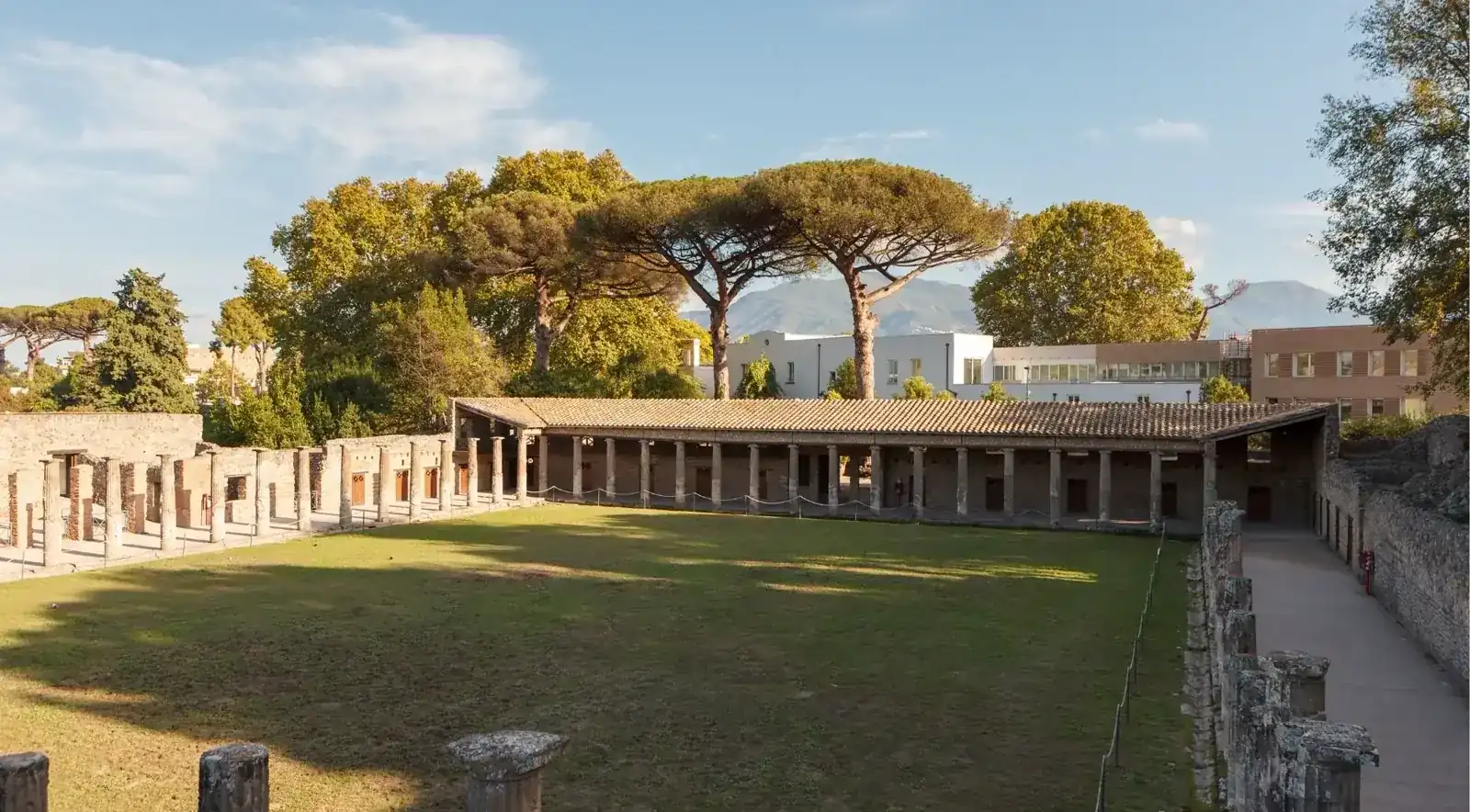
Early November usually has slightly milder afternoons and more daylight. Late November can still be lovely, but the mornings feel chilly and the sun sets earlier. As a rule of thumb, expect afternoons in the mid-to-high teens Celsius, cooler mornings and some wind.
Don't fixate on the monthly average. A bright 15 °C morning can be perfect for Pompeii, while a day of steady rain at 18 °C is a disappointment. If you are staying in Naples for several days, check the hourly forecast a day or two ahead and pick the driest morning.
In a thunderstorm, never shelter under trees, and follow staff instructions and the park's announcements. Storms and strong wind can close single routes or the whole park.
Ordinary rain does not close the park. Light showers are fine if you have water-resistant shoes and a waterproof jacket.
If your itinerary is flexible, move the visit instead of walking the ruins in heavy rain. If this is your only day and the site is open, plan a focused 90-minute to two-hour visit near the western entrances. The Antiquarium has exhibitions, but it is not a full indoor museum and not an emergency shelter.
For a whole wet day, the National Archaeological Museum of Naples holds many of the frescoes, mosaics and objects found at Pompeii. A small-group museum tour with an archaeologist (on Viator, 4.8/5 from 68 reviews, from about $50) gives you the context in a couple of hours.
Much quieter than the autumn months before it. The park's own figures for 2024 show about 6,300 visitors a day in November, against 15,500 a day in October, even though the shorter winter timetable already starts on 15 October. Those are daily averages for the whole park, so a weekday morning and a holiday weekend still feel very different.
Visit on a weekday and arrive near 9:00 AM for the most relaxed start. Coaches and school groups still bunch up at the House of the Vettii, the Forum and the Lupanar. A short walk into the residential streets usually finds you a quieter Pompeii.
Sunday 1 November 2026 is the first Sunday of the month, when the park normally takes part in Italy's Domenica al Museo with free entry. Free days work differently from ordinary tickets: you cannot book standard entry online in advance for them. Don't assume a free Sunday means no waiting. For how every month compares, see our best time to visit Pompeii guide.
Pompeii Express, €20. The right ticket for most first-time visitors spending two to four hours on the city streets, the Forum, the baths, the theaters and the houses.
Pompeii Plus, €25. Adds the suburban villas, above all the Villa of the Mysteries and its frescoes. Choose it when you have time for the extra walk, and remember the winter route needs you through Porta Ercolano by 3:30 PM.
The park's thematic guide, €8 extra. The park runs scheduled guided visits of about 90 minutes on civic life and daily life. At the published adult rates, admission plus this guide comes to €28, subject to availability.
A commercial small-group guide. A two-hour tour with an archaeologist and entry included gives first-timers a clear introduction without researching every building. Check the group size, the meeting point, whether the ticket is included and the cancellation terms. A guided tour usually uses the same Express ticket, not a longer or different one.
Book ordinary admission through Pompeii's official Vivaticket portal. Tickets carry your name and are normally neither transferable nor refundable unless something exceptional happens, such as an official closure. In a rainy month, that makes a flexible date valuable. Our Pompeii tickets guide goes through every ticket type.
The two-hour introduction with your Express entry included, led by an archaeologist, in groups of up to 20. It fits a short November day: a 9:00 or 10:00 AM start gets you round the Forum and the main houses well before the interiors take their last visitors at 4:00 PM.
Check November datesFree cancellation up to 24 hours before · secure checkout via GetYourGuide
The guided way to see the Villa of the Mysteries with the city. Book a morning start in November so the group reaches Porta Ercolano before the 3:30 PM villa cutoff.
See the villa tour9:00 AM: Porta Marina and the Forum. Arrive early and start at the civic center. The square, the temples and the columns explain Pompeii's public life, and the view of Vesuvius puts the eruption in context.
9:45 AM: Roman houses. Walk to the House of the Faun, a huge elite residence, and the richly painted House of the Vettii if it is open. Their layouts show the difference between rooms for receiving guests and the private parts of the house.
10:45 AM: Baths and shops. Look around a public bath complex, then follow streets with stepping stones, shop counters and fountains. Pompeii makes most sense once you notice its ordinary infrastructure.
11:45 AM: Theater or Antiquarium. Choose the theater district for public entertainment or the Antiquarium for objects and the story of the excavations. Finish around lunchtime instead of racing to the far eastern sights.
With more time, add the Amphitheater at the eastern end, or plan a villa-focused route on Pompeii Plus. Check the park's list of open buildings before you go, because access changes for conservation work and staffing.
Pompeii's paving is ancient, uneven and slippery when wet. Comfortable walking shoes with a good sole matter more than anything else you pack.
A waterproof jacket with a hood is more use than an umbrella alone. Add breathable layers and a compact umbrella for light showers.
Bring a water bottle and download the official map before you arrive, so you are not hunting for signal in the ruins.
The park restricts luggage and bags larger than 30 × 30 × 15 cm. Paid storage is available at specified entrances.
Ordinary entry is single-use: you cannot leave for lunch and come back on the same ticket. Eat only in the designated areas inside.
From Naples: take the EAV Circumvesuviana train toward Sorrento and get off at Pompei Scavi–Villa dei Misteri. Porta Marina is a short walk from the station. EAV's new timetable for its Vesuvian lines started on Saturday 17 October 2026, with a train every 30 minutes to and from Sorrento, so use the current schedule, not an older guide. If you would rather not deal with the train, a Pompeii tour from Naples with ticket, guide and transfer (4.7/5 from 2,795 reviews, from $53) takes care of the travel. More options are in our Pompeii from Naples guide.
From Sorrento: take the same line toward Naples and get off at Pompei Scavi. The ride is around half an hour, depending on the service.
By car: follow the signed access roads and use the paid parking outside the archaeological park. There is no visitor car park inside the ruins.
You can pair Pompeii with the crater walk if conditions allow, but the winter day is short. Vesuvius runs its own timed tickets and shorter access hours, and snow, ice, low cloud or strong wind can stop crater visits even when Pompeii is open. Unless you are happy with a shorter visit to the ruins, give Pompeii a half-day of its own.
If you want both without arranging the transport, the full-day Pompeii and Mount Vesuvius tour from Naples or Sorrento (4.7/5 from 5,052 reviews, from $107) handles the driving between them; the crater part still depends on the weather. Our Mount Vesuvius tours and tickets guide has the crater hours and ticket rules.
Yes, normally from 9:00 AM to 5:00 PM, with last entry at 3:30 PM, subject to exceptional closures.
Usually not. The average daily high is about 17 °C, and cool mornings with mild afternoons suit walking. Rain is the bigger concern.
November is the wettest month of the year around Naples, with about 10 rainy days in an average year. Check the short-range forecast for your dates instead of relying on the monthly average.
No. The days are shorter and cooler, but you can still have a wonderful visit, and the park is far quieter than in October.
Booking saves you the ticket-office queue, but ordinary tickets carry your name and have strict date-change conditions. If your plans leave several possible days, weigh flexibility against booking early, or choose a tour with free cancellation.
No. You need Pompeii Plus or the suburban-villas upgrade, and in winter you must reach Porta Ercolano by 3:30 PM.
It falls on the usual first-Sunday free-entry day, subject to the park's current procedure and any exceptional announcement. Advance online booking of standard entry is not offered on free Sundays.
Three or four hours makes a good introduction; history enthusiasts may want five or six, which in November means arriving at 9:00 AM.
Pompeii is worth visiting in November if you plan for changeable weather and start early. The cooler air and the thinner crowds make its Roman streets easier to enjoy than in peak summer. Don't let a brief shower put you off, but don't push on through dangerous weather. Leave yourself time for the small traces of ancient life, because they are what stay with you.
Arrangements checked in October 2026. Reconfirm prices, hours, closures and services for your travel date.