Grippy walking shoes
The Roman paving is uneven and slippery when wet. Comfortable shoes with a good grip are essential.
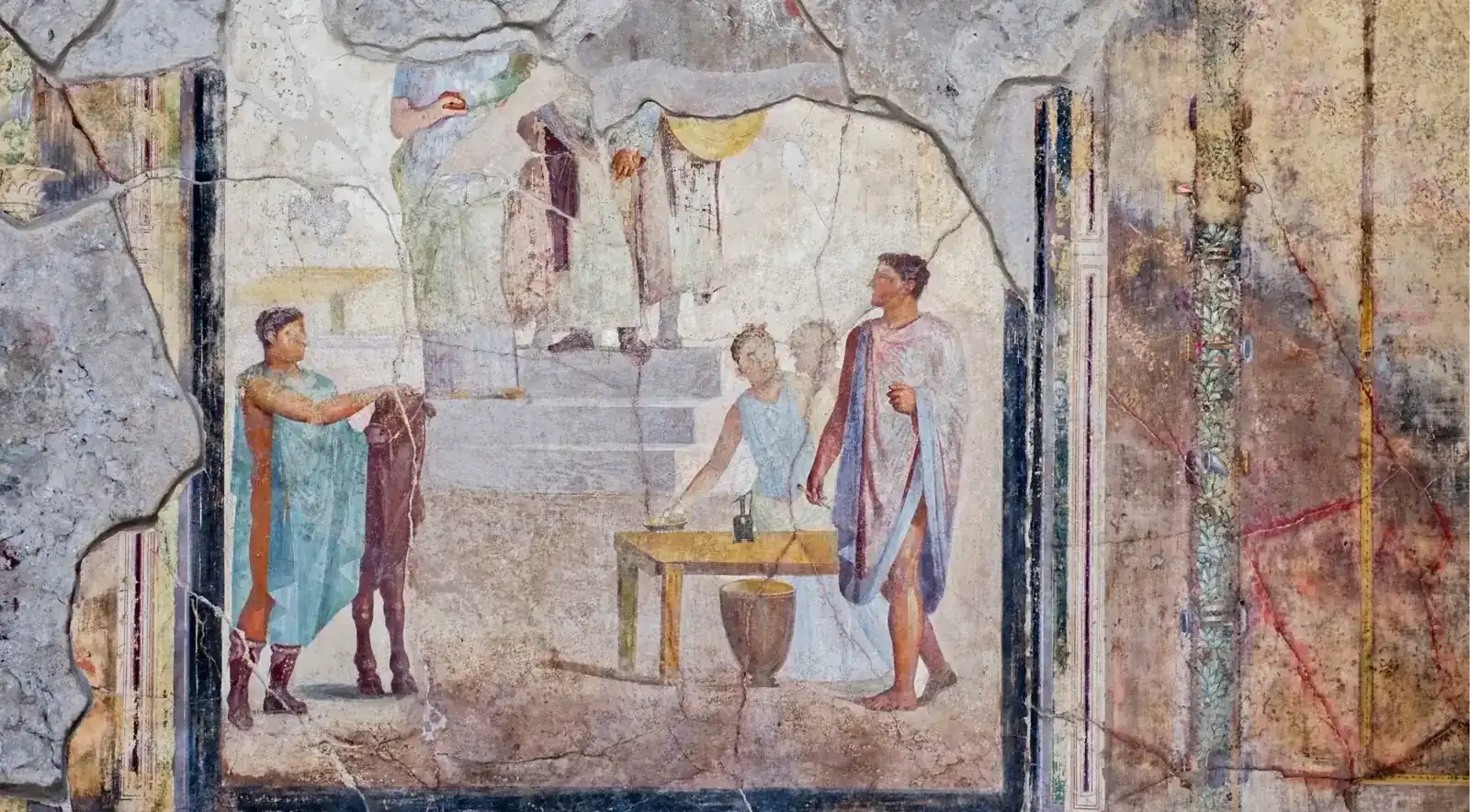
December, January and February give you cooler and often quieter days for walking the Roman city. In 2024 the park counted about 4,500 visitors a day in December, 3,600 in January and 4,900 in February, the three quietest months of its year. The trade-offs are rain, an early close and the Christmas and New Year exceptions.
The most memorable winter visits are not always sunny ones. A low sky over the Forum, cool air along streets rutted by Roman cart wheels and a Vesuvius now and then dusted with snow make a scene you will not find on a crowded August afternoon. Treat Pompeii as what it is, a large outdoor archaeological park, and dress for a long walk outside.
Visiting in November instead? See Pompeii in November. Still choosing between seasons? Our best time to visit Pompeii guide compares every month.
| Detail | December–February |
|---|---|
| Opening | 9:00 AM–5:00 PM |
| Last admission | 3:30 PM |
| Adult Express admission | €20 |
| Adult Plus admission | €25 |
| Daytime highs | About 13–14 °C (55–58 °F): 14.1 °C in December, 13.0 °C in January, 13.5 °C in February |
| Weather | Changeable, with rain and wind possible; about 9 to 10 rainy days a month |
| Snow at the ruins | Unusual |
| Snow on Vesuvius | Possible at times |
| Recommended visit | 3–4 hours |
The park's normal closing days are 25 December and 1 January, "unless otherwise communicated". It has made special holiday arrangements in previous years, so recheck both dates on the official timetable shortly before your trip.
A winter visit to Pompeii pairs well with the National Archaeological Museum of Naples, where many of the site's frescoes and mosaics now hang, the compact ruins of Herculaneum, a Mount Vesuvius crater walk on a clear day, and the Christmas streets of Naples or a quieter stay in Sorrento and on the Amalfi Coast. These are tours and tickets around Pompeii running in the winter months.
Pompeii's ruins are not decorated for Christmas, but they make an easy excursion from Naples over the holidays. Explore in the morning, then head back to the city's churches, cafés and Christmas streets.
The drawback is daylight. The sun sets around 4:35 to 4:45 PM in December, close to the park's 5:00 PM closing, and turning up near last entry leaves you too little useful time. Aim to go in at 9:00 or 10:00 AM.
Public holidays can bring more Italian visitors, and trains and buses may run special timetables. Christmas Eve and 26 December are normally open days, but check for special hours. Christmas Day is on the closure list unless the park announces otherwise.
January is usually the coldest month around Pompeii, with an average daily high of 13 °C and much cooler mornings. On a clear day that is ideal walking weather. It is also the quietest month of the year, at about 3,600 visitors a day in 2024, and crowds thin further on weekdays after the New Year holidays.
The drawback is cold rain or wind. Wear layers and grippy, water-resistant shoes. Don't expect an empty site either: school groups and organized tours visit all year. 1 January is a regular closing day subject to special announcements, and the first Sunday of the month normally has free admission.
If you dislike heat and don't mind a sweater and a rain jacket, a sunny January morning is a wonderful time to see Pompeii.
February is still winter, but the days lengthen noticeably, and by the end of the month the sun sets around 5:45 PM. The park still closes at 5:00 PM, so the light won't buy you more time inside. It does make the trip back to Naples or Sorrento more comfortable.
Expect chilly mornings and the odd shower, and in return a less hurried visit than in summer. Our favorite February plan is a three-hour morning visit, then an afternoon in Naples or a slow return to Sorrento.
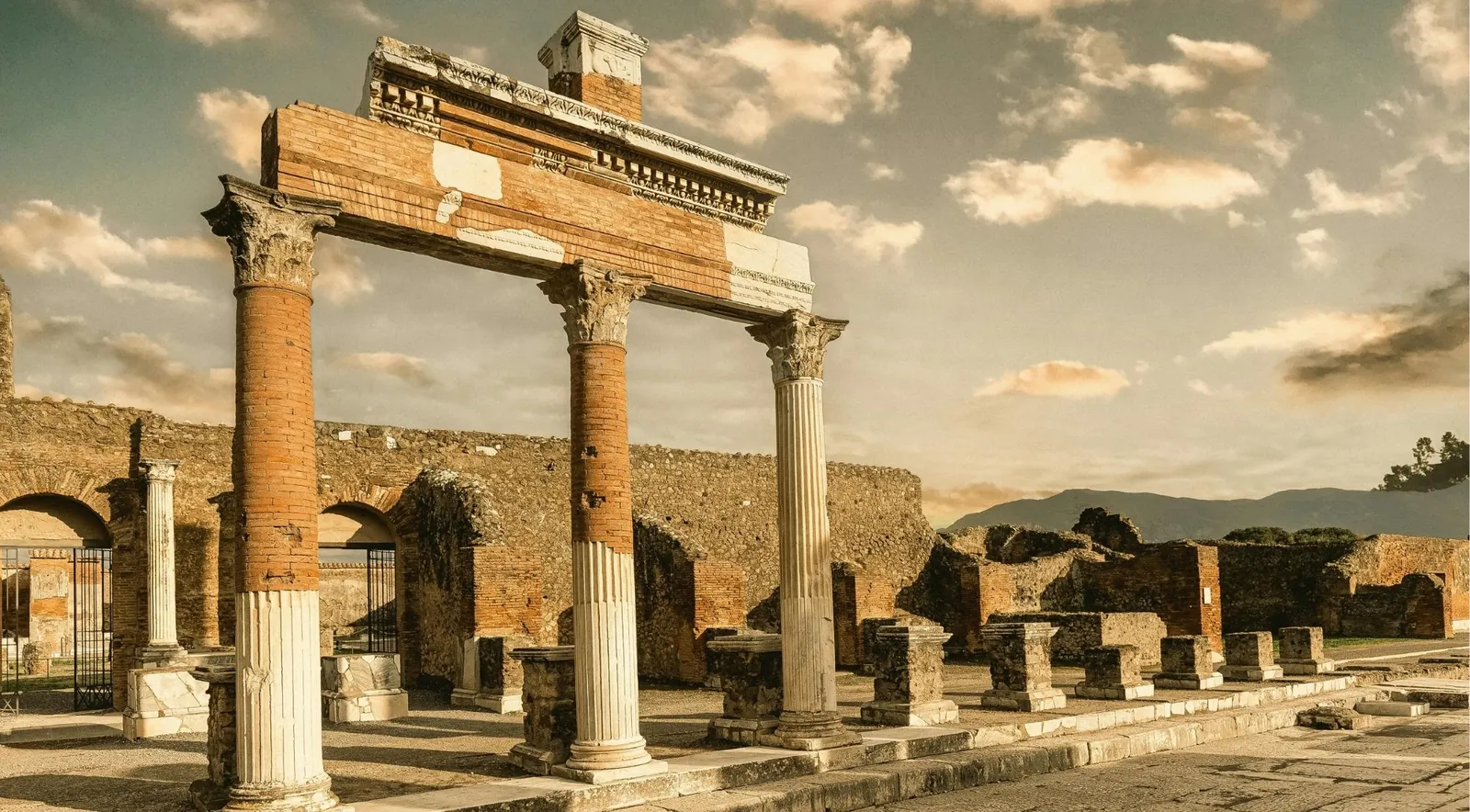
Choose December if you are in Naples for the holidays, January if a quiet site matters most, and February if you want a little more daylight. The forecast for your actual day matters more than the small differences between the monthly averages. If you are staying four or five nights, keep Pompeii flexible until you can see a safe, fairly dry morning.
Winter is only one option. If you are still deciding when to come at all, our best time to visit Pompeii guide weighs every month against the others.
Pompeii keeps its shorter timetable from 15 October to 15 March: it opens at 9:00 AM, takes its last visitors at 3:30 PM and closes at 5:00 PM. The longer summer hours return from 16 March.
A common mistake is assuming every house stays open until 5:00 PM. The House of the Vettii, the Lupanar and the Antiquarium open at 9:15 AM, take their last visitors at 4:00 PM and close at 4:20 PM in winter. Single buildings can close for conservation work, staffing or repairs, so check the park's list of open buildings before you go.
Villa of the Mysteries: the route to it through Porta Ercolano has a 3:30 PM winter access cutoff, and the villa needs a Pompeii Plus ticket. Don't leave it for the end of the afternoon.
| Date | What to check |
|---|---|
| Sunday 6 December 2026 | First Sunday: normal free-admission day |
| 8 December | Italian public holiday; normally open |
| 24 December | Normally open; confirm special hours |
| 25 December | Normally closed; an exception is possible |
| 26 December | Public holiday; normally open |
| 31 December | Normally open; check the hours |
| 1 January 2027 | Normally closed; an exception is possible |
| Sunday 3 January 2027 | First Sunday: free admission |
| 6 January | Epiphany public holiday; normally open |
| Sunday 7 February 2027 | First Sunday: free admission |
Free first Sundays work differently from ordinary days: you cannot book standard entry online in advance for them. They draw extra visitors, so go in early. And treat 25 December and 1 January as "normally closed", not "definitely closed", until the park confirms its holiday arrangements for the season.
Pompeii Express (€20) covers the main ancient city. It is our pick for a first-timer with three or four hours.
Pompeii Plus (€25) adds the suburban villas, above all the Villa of the Mysteries. Choose it if Roman frescoes are high on your list and you have time for the extra walk.
The Greater Pompeii three-day ticket (€30) adds more sites in the Pompeii network, such as Oplontis and Stabiae. It does not give you three entries to Pompeii itself, and it does not cover Herculaneum, which is run separately.
The park's 90-minute thematic guided tours cost €8 extra per adult, depending on the calendar, so Express plus a thematic tour comes to €28. The official audio guide costs €9. Commercial guides set their own prices; check whether the ticket is included.
Tickets carry your name and usually cannot be transferred or moved to another date. In a changeable season, read a tour's cancellation terms carefully: bad weather does not automatically mean a refund. Our Pompeii tickets guide has the full ticket list.
Arrive around 9:00 AM and start at the western entrance near the Forum. Take your time with the main square, the Temple of Apollo and the public baths. Then go on to the House of the Faun and the House of the Vettii (when it is open) to see how wealthy families lived, before its 4:00 PM last entry. Finish along the shopping streets and the theater area, or head into the Antiquarium if a shower arrives.
For most first-timers, three or four hours is about right. With only two, stick to the Forum and the houses near it. With five, add the Amphitheater in the east or follow a villa route on Pompeii Plus, but don't try to fit every sight into one loop.
A two-hour small-group tour with an archaeologist suits winter well, because it gives the short day a shape. A good tour states its real group-size cap, whether admission is included, where it meets and the cancellation deadline. Check, too, whether you can stay inside the ruins on your own afterwards.
On your own, you can use the official map, the audio guide or the inexpensive scheduled thematic tour. Private transport is rarely needed from central Naples or Sorrento, where the Circumvesuviana stops at Pompei Scavi. It is more useful from Positano or Amalfi, where public transport means changes. From there, the Positano to Pompeii small-group tour (4.9/5 from 190 reviews, from $176) includes pickup, entry and a two-hour archaeologist-led walk.
Your Express entry and two hours with an archaeologist, in groups of up to 20 with headsets for larger groups. A 9:00 or 10:00 AM start puts you through the Forum and the main houses before the interiors' 4:00 PM last entry.
Check winter datesFree cancellation up to 24 hours before · secure checkout via GetYourGuide
Choose a two- or three-hour version, with the Express ticket included, and the listing states you are free to keep exploring on your own after the tour, which is what you want on a short winter day.
See this tourThe Roman paving is uneven and slippery when wet. Comfortable shoes with a good grip are essential.
Dress in layers with a waterproof jacket, a small umbrella for ordinary showers and a water bottle. A light hat or gloves help on a cold morning.
The park restricts oversized bags, so leave large luggage at your hotel or use the paid storage.
Ordinary admission allows a single entry; leave for lunch and you normally cannot come back in. Take a break at the visitor facilities or eat afterwards.
With a pushchair or limited mobility, follow the park's Pompeii for All itinerary, not the ordinary routes with steps and uneven slopes. A wheelchair-accessible private tour from Naples (5.0/5 from only 16 reviews, from $108) adds an adapted vehicle; read the recent reviews first.
In a thunderstorm, don't shelter under trees or the remains of ancient roofs. Severe weather can close routes for safety, so follow staff instructions.
Light showers are usually manageable when the park is open. Stick to the central highlights and let yourself cut the visit short. Persistent heavy rain makes an outdoor archaeological walk miserable.
If you can change your date, a drier day is worth the wait. The National Archaeological Museum of Naples is the best indoor alternative, because it displays many finds from the Vesuvian sites; a small-group museum tour with an archaeologist (on Viator, 4.8/5 from 68 reviews, from about $50) walks you through it. Herculaneum is more compact than Pompeii, but it is not rainproof either.
Pompeii and the crater can share a full winter day, but the mountain has its own shorter access window and can close for snow, ice or strong wind. If Roman history is your main interest, put Pompeii first and treat the crater as a weather-dependent extra.
A combined guided trip saves you arranging the travel and the two separate admissions: the full-day Pompeii and Mount Vesuvius tour from Naples or Sorrento (4.7/5 from 5,052 reviews, from $107) is the best-reviewed of them. Our Mount Vesuvius tours and tickets guide has the crater's seasonal hours.
Normally yes, every day except Christmas Day, which is on the closure list unless the park announces an exception. Hours are 9:00 AM to 5:00 PM with last entry at 3:30 PM.
1 January is normally on the closure list, but the park has opened on special terms in previous years. Check the announcement for 2027.
Snow at the ruins is unusual. The upper slopes of Vesuvius do get snow at times.
Usually not, if you dress for it. The average daily high is about 13 °C; rain and wind matter more than the cold.
No, there is no seasonal discount. Standard Express admission is €20 at the published 2026 rate, though the first Sunday of each month is free.
Yes, when it is open, with a Pompeii Plus ticket and within the suburban route's access times: reach Porta Ercolano by 3:30 PM.
Three to four hours suits most first-timers; keen enthusiasts may want longer, which means going in at 9:00 AM.
Better for cool walking weather and smaller crowds; worse for short days and unpredictable rain.
Pompeii is an underrated winter trip. December gives you an archaeological morning inside a Naples Christmas break, January is the quietest month after the holidays, and February brings longer days. Arrive early, dress for a long walk outdoors, and choose your day by the forecast, not the calendar alone.
Arrangements checked in October 2026. Holiday openings, prices and access can change with later announcements.