- 3–5 hrsTypical Pompeii visit
- 2–3 hrsTypical Herculaneum visit
- 8:30 AMHerculaneum opens in winter
- €36Both standard adult tickets
- 3:30 PMLast entry at both in winter
If You Have Two Days Near Naples, See Both
Pompeii covers a large archaeological landscape, with long streets, a grand Forum, theatres, baths, fountains and an Amphitheatre. Herculaneum is compact, with surviving wooden fittings, upper floors, painted rooms and a deeply moving ancient waterfront. Neither is a lesser version of the other, and with two days in the Naples area you can visit both. With one day, a guided trip such as the Pompeii and Herculaneum tour with an archaeologist from Naples, Sorrento or Rome covers the transport and both tickets.
For Pompeii's full winter timetable and holiday closures, see Pompeii winter opening hours.
Pompeii vs Herculaneum at a Glance
| Factor | Pompeii | Herculaneum |
|---|---|---|
| Main appeal | The scale and variety of a whole city | Exceptional preservation of buildings and organic materials |
| Typical visit | 3–5 hours | 2–3 hours |
| Winter hours | 9:00 AM–5:00 PM | 8:30 AM–5:00 PM |
| Last entry | 3:30 PM | 3:30 PM |
| Standard adult ticket | €20 (Express) | €16 |
| Walking | Long stretches of original Roman street | Compact, but with steps and slopes |
| Rain | Long time outdoors | Also outdoors, but a shorter visit is easier |
| From Naples | Pompei Scavi station | Ercolano Scavi station |
Other Experiences You Might Enjoy
The two buried cities are only part of a winter trip around the bay. You could add the finds in the National Archaeological Museum of Naples, the crater of Mount Vesuvius on a clear day, the villas at Oplontis and Stabiae, the old centre of Naples, or a day in Sorrento and on the Amalfi Coast. These are tours and tickets around Pompeii.
Why the Two Cities Survived Differently
Pompeii was covered by falling pumice and ash, then by later eruptive material. The roofs and upper parts of many buildings collapsed under the weight, but the buried street plan survived in remarkable detail. Today you can walk a huge area and see how the public and private spaces of a Roman city fitted together.
Herculaneum was buried by extremely hot volcanic surges and deep deposits. Organic materials carbonised and were quickly sealed from decay, which is why wooden beams, furniture, partitions and upper floors survive so well. Walking through some of its rooms feels more like entering an abandoned ancient home than looking at a ruin.
Our verdict on the history: Pompeii wins on the scale of the city. Herculaneum wins on the everyday detail of some individual buildings. Both show the human cost of the eruption.
Pompeii's Best Sights
The Forum: the civic centre, framed by public and religious buildings, with the classic view of Vesuvius when the sky is clear.
House of the Faun: one of the grandest houses in the city, with elaborate courtyards and plenty of evidence of wealthy family life. The original Alexander Mosaic is in Naples, not in the house.
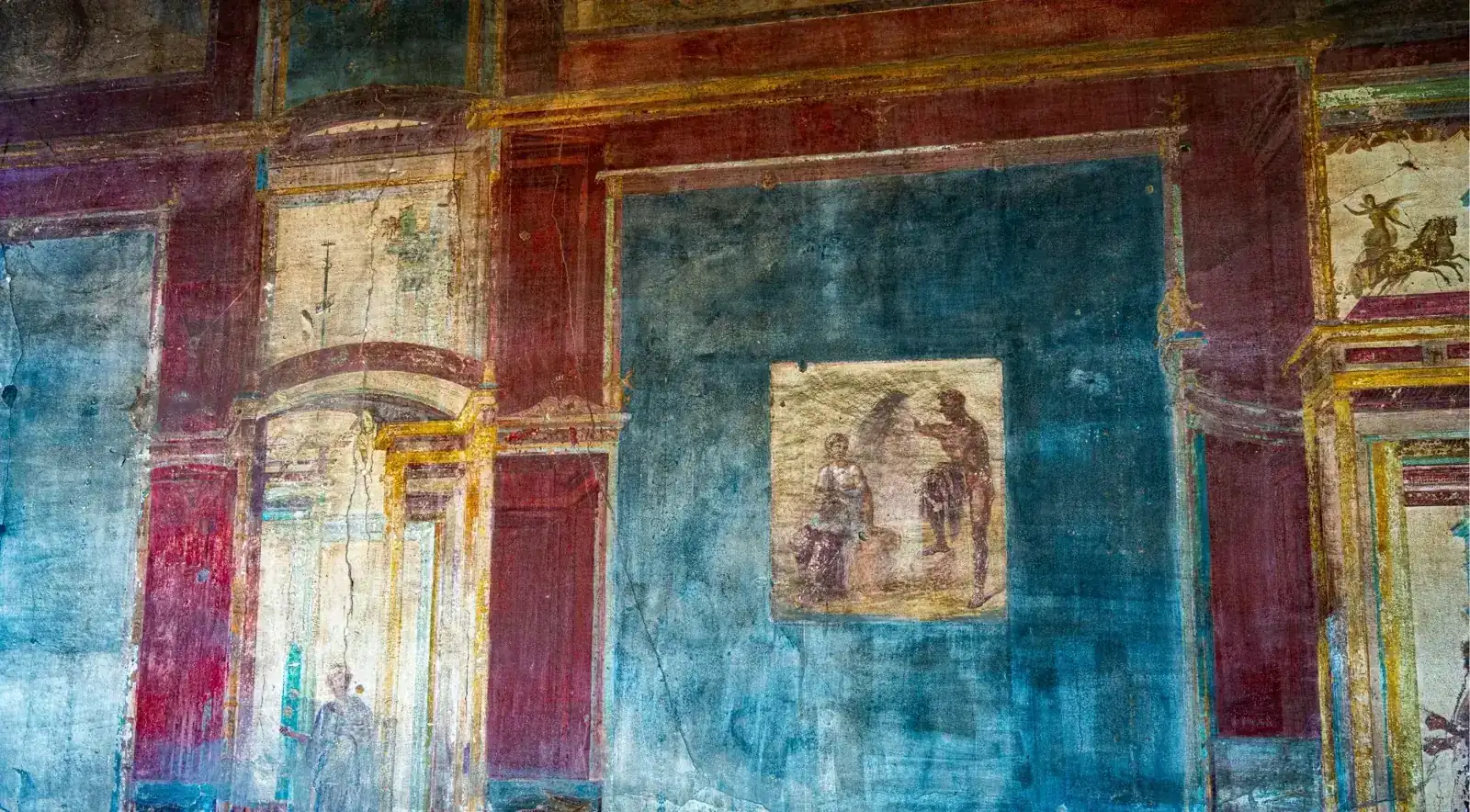
House of the Vettii: richly painted rooms that show how colourful Roman interiors were. Access depends on the current building schedule; see our House of the Vettii guide.
Stabian Baths: a fascinating example of Roman public bathing and the buildings that supported it.
The theatres and the Amphitheatre: public entertainment on a scale no indoor museum can give you. The Amphitheatre is near the eastern edge, so it adds a good walk.
Villa of the Mysteries: a favourite with art lovers for its remarkable cycle of frescoes. It isn't covered by the standard Express ticket, so choose Pompeii Plus and remember that entry to the suburban route stops at 3:30 PM in winter.
Herculaneum's Best Sights
House of Neptune and Amphitrite: beautiful decorative mosaics and coloured rooms that show Roman taste and wealth.
House of the Wooden Partition: remarkable carbonised timber, one of the clearest reminders that these were working homes, not archaeological diagrams.
House of the Deer: a grand residence known for its fine decoration and gardens. Conservation work can affect access.
Central Baths: especially rewarding for understanding Roman bathing, with unusually well-preserved rooms and decoration.
College of the Augustales: an important civic and religious building that shows local public life and the cult of the emperor.
The ancient beach and boat houses: archaeologists found the remains of hundreds of people who sheltered here during the eruption. It can be emotionally intense, especially for children. The coastline has since moved, so the excavated waterfront is now inland.
Exhibition spaces and the boat remains: selected displays explain the excavations and the objects found. Check what is open, because individual exhibits can close for conservation.
Important: the famous Villa of the Papyri is not open on an ordinary Herculaneum ticket; the park currently lists it as closed for excavation and maintenance work. The ancient theatre has also had conservation restrictions. Don't plan your day around either without an official special-opening announcement.
Which Is Better in Winter?
Winter temperatures around Naples can make walking comfortable, but rain and shorter days affect any outdoor archaeological visit.
Where Herculaneum has the edge: you can see much of the open site in two or three hours, which limits your time walking in the cold. Some buildings are fairly complete, although no route keeps you fully out of the rain.
Where Pompeii has the edge: the cooler weather makes its long city walks more pleasant than in summer heat. If you want to understand the public scale of Roman life, winter is a lovely time to do it.
On a dry weekday with four or five hours free, we'd choose Pompeii. With only two hours, or if you prefer a compact site full of detail, Herculaneum is a very good choice. Our Pompeii in winter guide covers the season in more detail.
Rain: Which Site Makes More Sense?
In light rain, Herculaneum can be easier because the distances are shorter. Both are open-air excavations, though. Herculaneum's sunken streets, steps and paving can be slippery, and rain can affect safety and access. In a thunderstorm or dangerous weather, neither site is a safe swap for the other.
The National Archaeological Museum of Naples is a far more reliable indoor alternative. It holds many of the major finds from Pompeii and Herculaneum, although particular galleries can close for a while; an archaeologist-led small-group tour of the museum is sold on Viator. If your dates are flexible, move the outdoor sites to a safer, drier day. More wet-weather advice is in Pompeii in the rain.
How to Reach Both from Naples
Use EAV's Circumvesuviana railway. Ercolano Scavi station serves Herculaneum; from there, follow the road down to the archaeological park at Corso Resina 187. Pompei Scavi–Villa dei Misteri serves Pompeii's western Porta Marina entrance.
Both are on the Naples–Sorrento line, with Herculaneum closer to Naples. EAV brought in a new timetable on 17 October 2026, so check the current connections. Campania Express, EAV's tourist train, was reported suspended from 1 October 2026 until further notice; check EAV before you travel and plan on the regular trains. Our Naples to Pompeii winter train guide has the new timetable.
Because Herculaneum is closer to Naples, it is easy to pair with a city museum or an afternoon in town.
Can You Visit Both in One Day?
Yes, with an early start and a realistic plan. We'd usually go to Pompeii first if it matters most to you: go in at around 9:00 AM, explore for three or four hours, then take the Circumvesuviana to Ercolano Scavi for a focused two-hour afternoon at Herculaneum. You have to leave Herculaneum's archaeological area before the outer gate closes, so don't arrive near 3:30 PM expecting a relaxed visit.
The other way round, start at Herculaneum at 8:30 AM, spend two to three hours there and continue to Pompeii around midday. You get the early start, but the bigger site is left for the afternoon, when its shorter winter day can feel rushed.
The best two-day alternative: Pompeii, and perhaps Vesuvius, on one day; Herculaneum and the National Archaeological Museum of Naples on the next. Each site gets the time it deserves, and you depend less on perfect connections. Our Pompeii and Vesuvius in winter guide covers the first of those days.
Tickets: Two Parks, Two Admissions
A standard adult ticket is €20 at Pompeii (Express) and €16 at Herculaneum, so €36 for separate entry to both. EU citizens aged 18 to 24 pay €2 at each. Pompeii Plus, at €25, covers Pompeii's suburban sites but does not include Herculaneum. The €30 Greater Pompeii three-day ticket also covers only sites in the Pompeii network.
Each park has its own official booking site:
- Pompeii: pompeii.vivaticket.it
- Herculaneum: ercolano.cultura.gov.it/biglietti
Entry to both is normally free on the first Sunday of the month under the Italian state-museum programme, but the procedures differ. At Herculaneum you collect a free ticket at the ticket office on the day; at Pompeii you currently go straight through the turnstiles. Check each park's notices. Pompeii tickets explained covers every Pompeii ticket type.
Are Guided Tours Worth Paying For?
A two-hour visit with an archaeologist can be very rewarding at either site. At Pompeii a guide plans a route through a sprawling city; the two-hour Pompeii tour with an archaeologist and entry ticket (4.8/5 from more than 24,000 reviews, from $34) is the most-reviewed example. At Herculaneum a guide explains the preservation, the houses and the ancient seafront: the Herculaneum small-group tour and ticket with an archaeologist on Viator (4.8/5 from 1,306 reviews, from $39, two hours) includes the entry ticket, and on GetYourGuide the Herculaneum guided tour with a local archaeologist has over 250 reviews.
If you visit both in one day, one specialist guide for the pair can explain how differently the two were buried and how archaeologists read them. Some tours include transport and both tickets, others only the guiding, so compare the total price and the exact meeting points. Private transport is convenient, but you don't need it if you're comfortable on the EAV trains.
Tours of both sites to compare (check winter dates and what your option includes):
- The Pompeii and Herculaneum tour with an archaeologist from Naples, Sorrento or Rome: 4.8/5 from 1,208 reviews, from $114, with a shared minibus and both tickets.
- The Pompeii and Herculaneum guided tour with an archaeologist: 4.96/5 from 311 reviews, from $127, five hours in a group of up to 10 with both tickets; you make your own way between the sites.
- The Pompeii and Herculaneum archaeologist tour from Naples: 4.5/5 from 547 reviews, from $137, seven hours with transport from central Naples and an optional light lunch.
- The Pompeii and Herculaneum small-group excursion from Sorrento: 4.7/5 from 396 reviews, from $134, 7.5 hours by minivan.
Pompeii & Herculaneum Tour from Naples, Sorrento or Rome
An archaeologist guides you round both cities, and the Pompeii Express and Herculaneum tickets, a shared minibus, tolls and parking are all included, with groups of up to 20. It has the strongest review record of the two-site days we compared, and the transport takes the train connection out of a short winter day. The length depends on where you start, so Rome is the long option. Meals are extra.
Check winter datesFree cancellation up to 24 hours before · secure checkout via GetYourGuide
Families and Accessibility
Herculaneum's shorter distances can suit young children who tire easily, while Pompeii's stepping stones, shops, theatres and Amphitheatre can excite older children. Both sites show sensitive remains of the eruption's victims, Pompeii its plaster casts and Herculaneum its skeletons, so you may want to prepare children beforehand.
Both parks run accessibility schemes, but neither is step-free throughout. Pompeii has a dedicated Pompeii for All route, and Herculaneum publishes information about accessible paths. A smaller site is not automatically better for every wheelchair user: check the ramps, steps and the exact route you plan to follow.
Special Experiences at Herculaneum
Herculaneum has offered limited guided access to exceptional areas such as the Suburban Baths. The programme published for late 2026 included selected Saturdays in November and December, at around €21 for admission and the special tour together for an adult. Dates are limited, and you shouldn't assume they continue into February 2027 without a new announcement. If your plans are flexible, one of these openings is a good reason to pick a particular Herculaneum date.
Pompeii vs Herculaneum in Winter: Common Questions
Which site should I visit first?
Pompeii if you want the experience of a whole city; Herculaneum if your time is short or preserved domestic detail matters most to you.
Is Herculaneum more completely preserved?
Many of its individual buildings and organic materials are, but Pompeii preserves a much larger city you can walk through.
Which is quieter in winter?
Herculaneum is often less busy, but neither site is guaranteed to be empty.
Which is better for a rainy day?
Herculaneum's smaller size helps in light rain, but both sites are outdoors.
Is Herculaneum included in Pompeii Plus?
No. The two parks have separate admissions and separate administrations.
Can I visit both on the same day?
Yes, if you start early, keep each visit focused and allow time for the train between them.
Which is better for children?
Herculaneum is often easier with younger children; Pompeii's scale and monuments tend to engage older ones.
Is the Villa of the Papyri open?
Not on an ordinary ticket: the Herculaneum park lists it as closed for excavation and maintenance work. Watch for special-access announcements.
See Both if You Can, and Let the Forecast Choose the Order
If you can visit both, don't treat Pompeii and Herculaneum as rivals. Pompeii shows you the scale and complexity of a Roman town; Herculaneum brings ancient home life into astonishing focus. In winter, choose by the forecast, the time you have and how much walking you enjoy, not by which ticket costs a few euros less.
Official Sources
Checked in October 2026. Building access, special tours and holiday opening hours can change.
- Pompeii opening hours and tickets (Pompeii Archaeological Park)
- Herculaneum tickets (Herculaneum Archaeological Park)
- Herculaneum visitor information
- EAV railway timetables